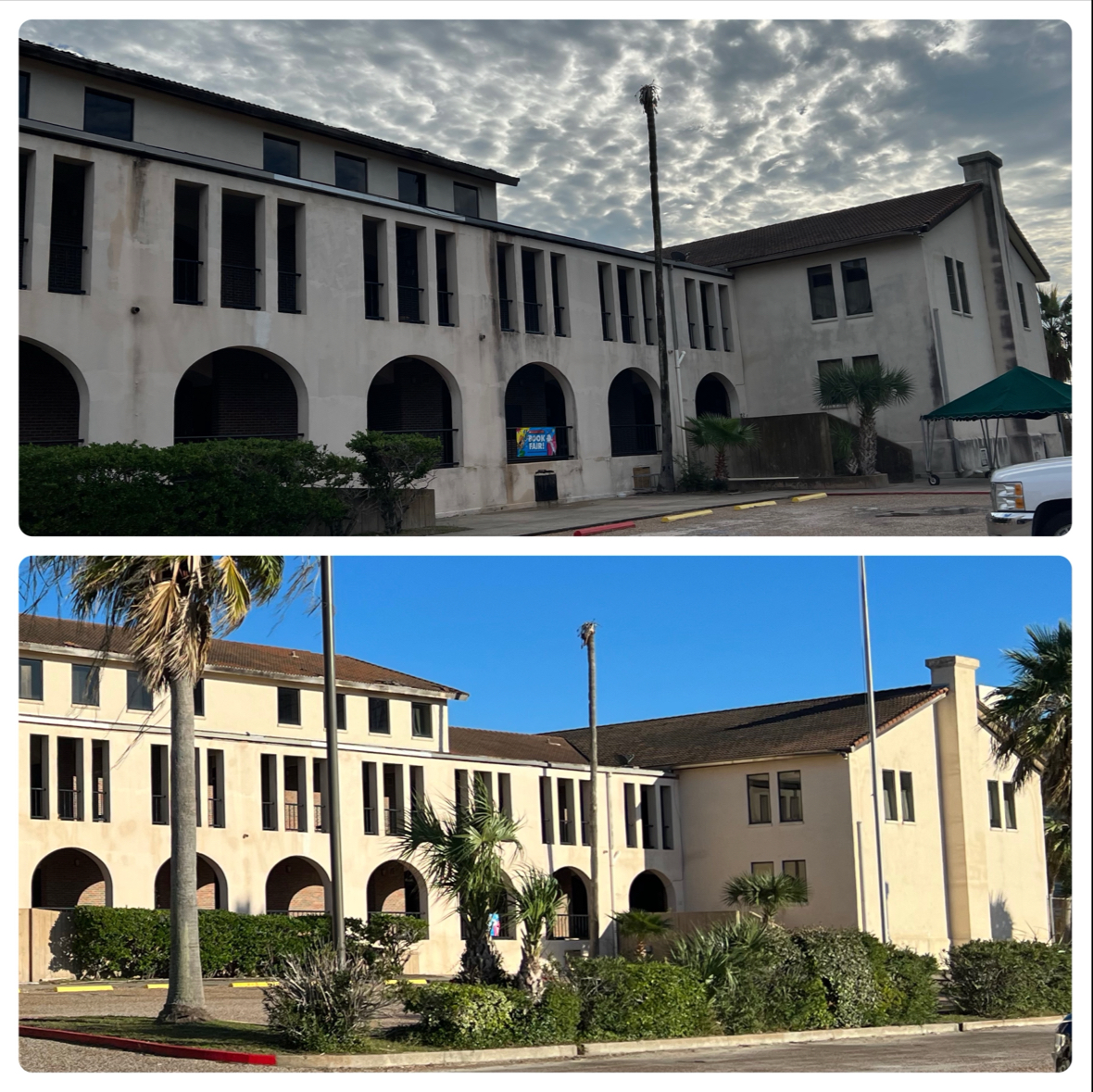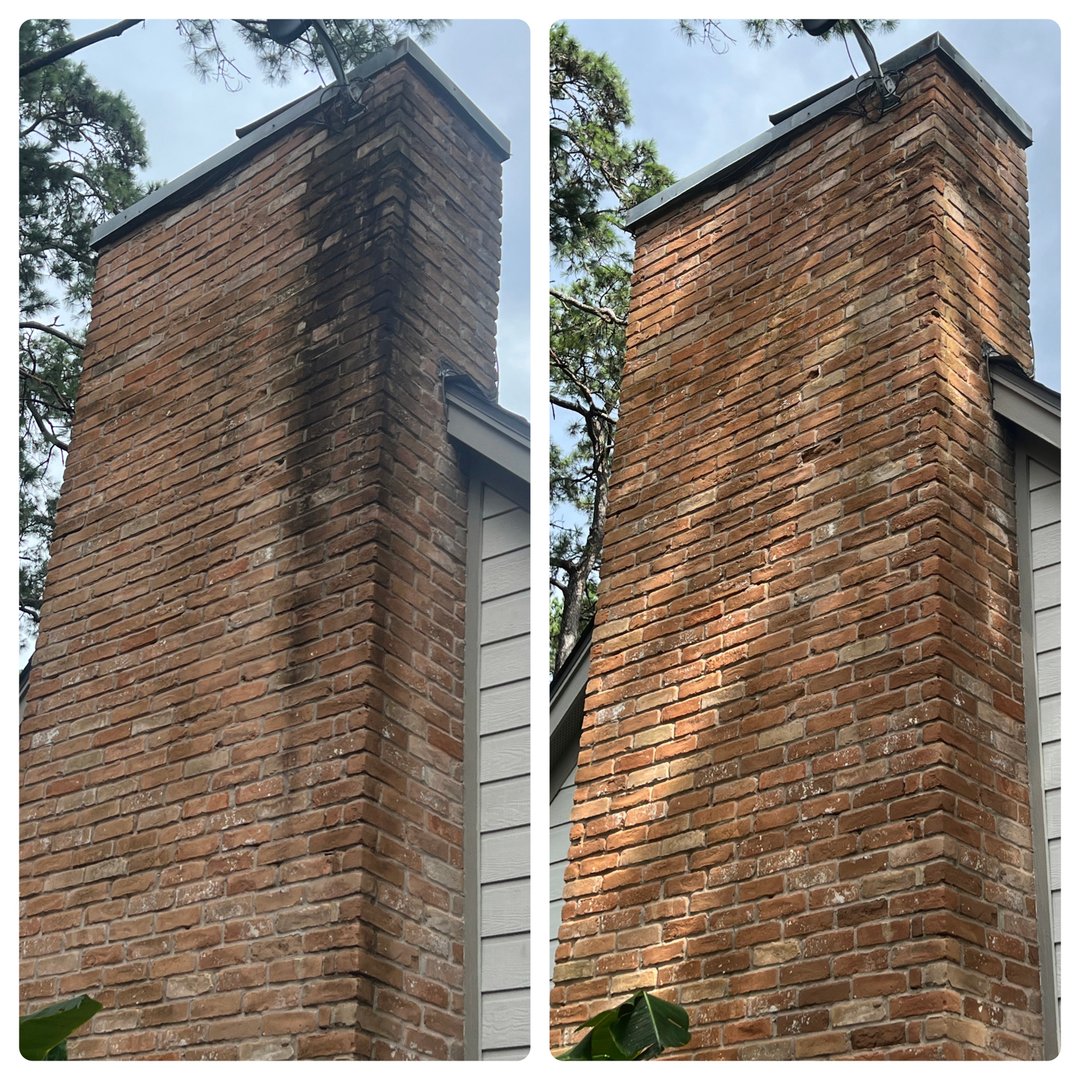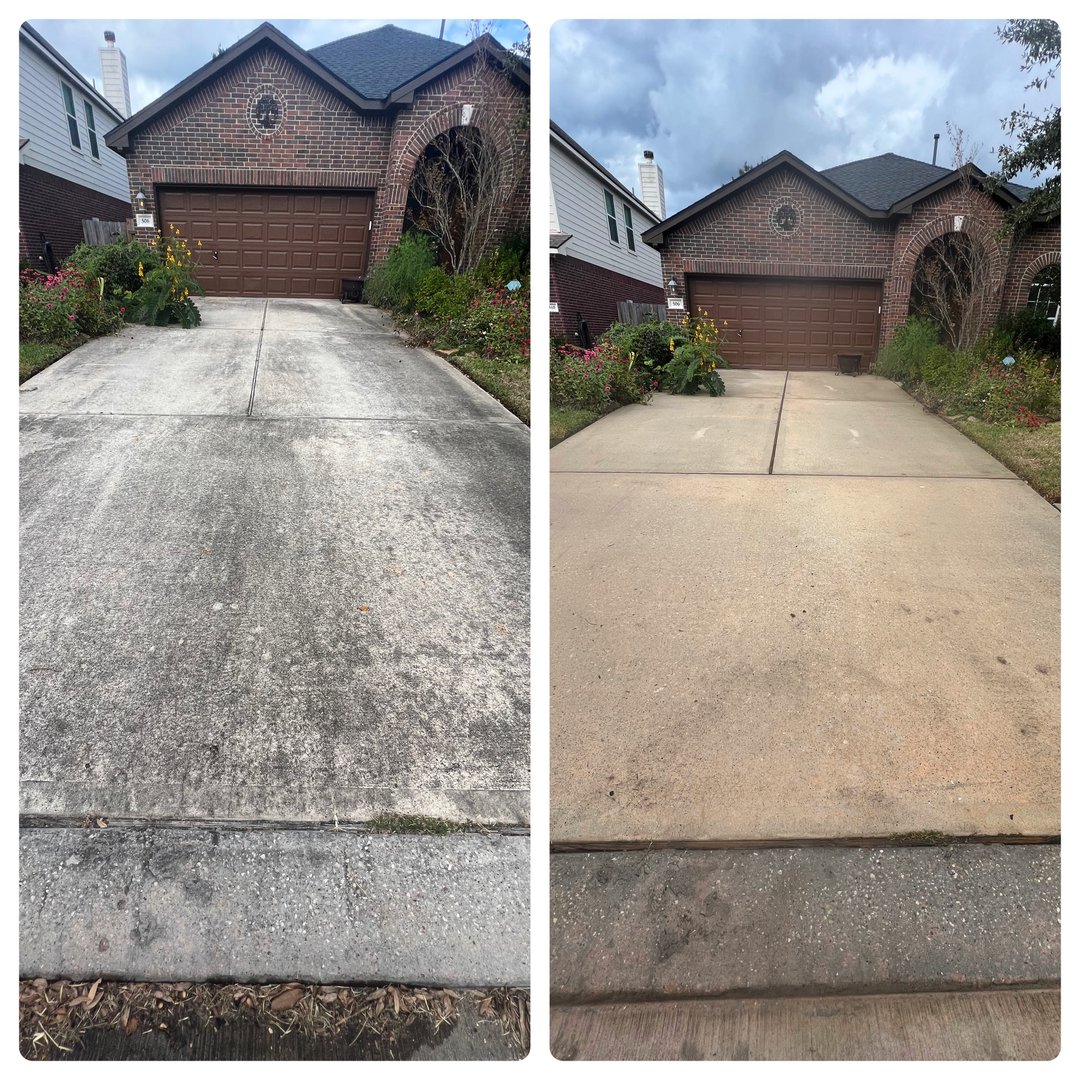
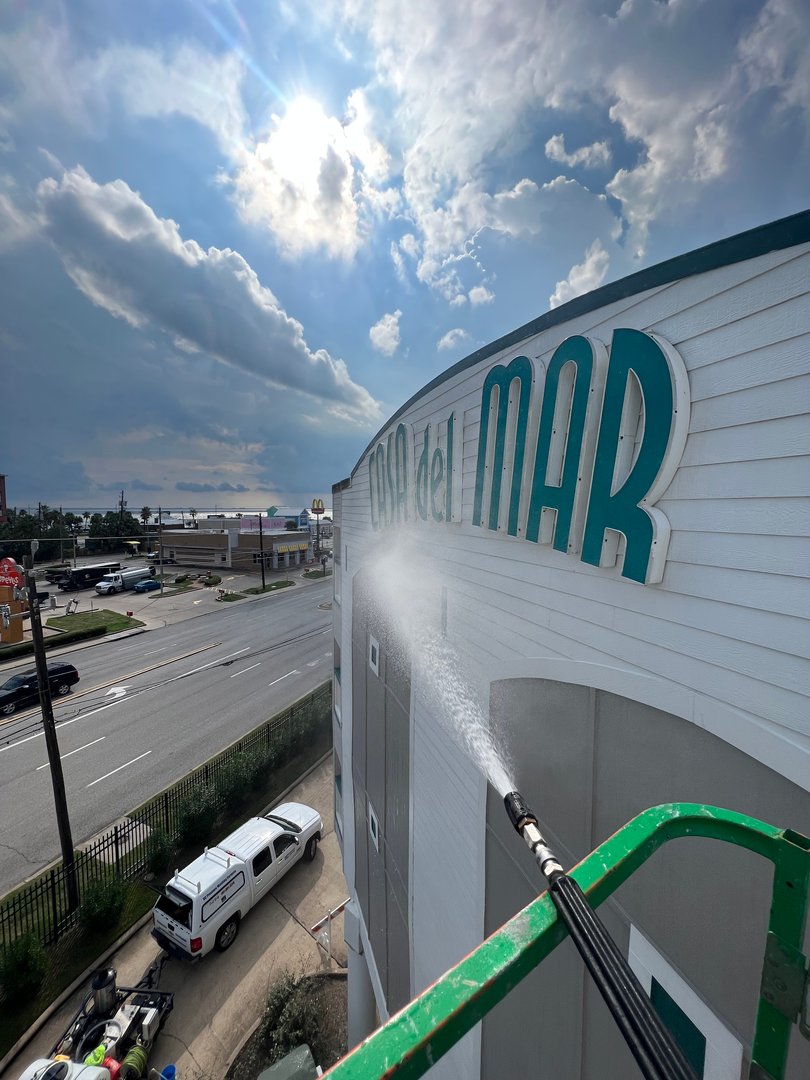
Black streaks on your roof and siding are almost always algae or mold, not dirt. This matters because the wrong cleaning method makes it worse. Pressure washing at high PSI can blast shingles right off, split wood siding, or force water behind your gutters. Spring's humidity and shade from oak trees make these streaks common here, and they spread fast if you ignore them. The right approach uses lower pressure, the right chemicals, and patience. Most homeowners either do nothing until the damage looks bad, or they rent a pressure washer and cause thousands in damage in an afternoon. There's a middle path that actually works.
Why Black Streaks Come Back So Fast in Spring
Our climate here is perfect for algae. You get morning moisture, afternoon heat, and plenty of shade from mature trees. Algae spores are everywhere. They land on your roof or siding, settle into the porous surface, and start feeding on the organic material. Once established, they'll spread up and down your roof in stripes following water runoff patterns. This is why you see them worse on the north side of your house or under tree cover. Pressure washing alone won't stop this. You kill the visible algae, but the spores are still there. Within a few months, you're back where you started.
The Damage Risk From DIY Pressure Washing
A standard rental pressure washer runs 3000 to 4000 PSI. Asphalt shingles can be damaged at 1500 PSI. Wood siding fails even lower. When you blast algae off with high pressure, you're not just removing the surface growth. You're forcing water into gaps, under shingles, and behind siding where it sits and causes rot. The damage isn't always obvious right away. You might not see the problem until next spring when water starts leaking into your attic or the wood behind your siding starts to fail. Repairing that costs a lot more than the cleaning ever would.
The Right Way to Clean Roof and Siding
Start with a soft wash approach. This means lower pressure, around 500 to 800 PSI, combined with a biodegradable chemical that kills algae and mold at the root. The chemical does most of the work. You apply it, let it sit for 15 to 30 minutes, and the algae dies. Then you rinse gently. The algae comes off because it's dead and weakened, not because you're blasting it. For stubborn areas, you might use a soft-bristle brush attachment, but you're still using light pressure. This method works on asphalt shingles, wood siding, vinyl, and stucco without risk of damage.
The chemical matters. You want something that targets algae and mold specifically. Bleach-based solutions work but can discolor some surfaces and damage surrounding plants. Enzyme-based or non-bleach algaecides are safer for most homes. A professional will know which product works best for your specific siding material and the type of growth you have. Applying the wrong chemical can actually make discoloration worse.
Prevention Between Cleanings
After cleaning, the algae will eventually come back because the spores are still present. You can slow this down. Trim back tree branches that shade your roof or siding. Shade plus moisture equals algae growth. Better airflow reduces moisture. Clean your gutters twice a year so water flows properly and doesn't pool against your house. If you have vinyl siding, a zinc-based strip installed along the roof edge helps prevent algae from spreading down. These steps won't stop algae forever, but they buy you time between cleanings.
When to Call a Professional
If your roof or siding already shows extensive black streaks, or if you've had water damage before, don't guess on this. A professional pressure washer in Spring will inspect the surface, identify what you're dealing with, pick the right cleaning method, and know the safe pressure levels for your specific materials. They carry commercial-grade equipment and insurance. If something does go wrong, you're protected. The cost of a professional cleaning is usually 300 to 600 dollars depending on the size of your house. Repairing water damage or replacing shingles runs into the thousands.
RC Pressure Washing TX serves Spring and the surrounding area with soft wash cleaning for roofs, siding, and other surfaces. If you've got black streaks or you want to prevent them, call to schedule an inspection and get a quote.