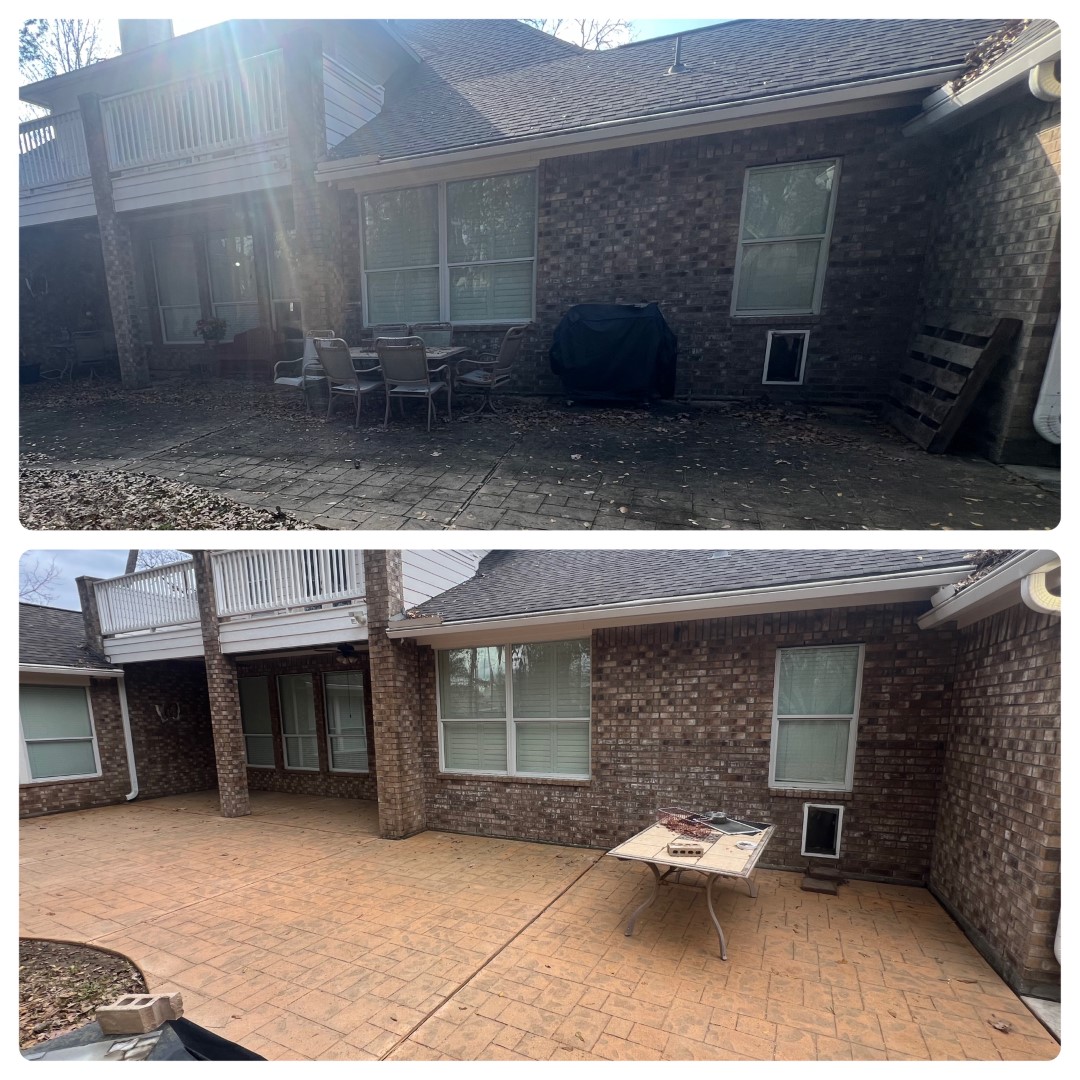
When you walk out to your patio on a Saturday morning and notice the color isn't quite what it used to be, the first question isn't always "should I pressure wash this?" Sometimes what looks like dirt is actually surface grime, and sometimes what looks like simple discoloration is the beginning of the sealant breaking down. Spring's humidity and occasional rain cycle create real conditions that put wear on outdoor concrete and pavers, so knowing the difference between a cleaning job and a restoration job saves you money and prevents you from doing unnecessary work.
Surface Dirt Versus Actual Damage
The easiest test is the water test. On a dry day, pour a cup of water onto a small section of your patio. If the water beads up and rolls off, your sealant is still doing its job. If the water soaks in immediately and darkens the concrete, you're looking at either no sealant left or a sealant that's worn through. In Spring's climate, with afternoon thunderstorms and morning dew, that water absorption matters because it leads to freeze-thaw cycles in winter and algae growth in summer.
If the water beads, you probably just need pressure washing. Dirt, pollen, and mildew sit on top of a good sealant. A professional pressure wash at the right PSI will clear that away without damaging what's underneath. If the water soaks in, pressure washing alone won't solve your problem. You'd clean it up temporarily, but the exposed concrete will keep absorbing moisture and deteriorating faster.
Look for Peeling, Flaking, or Discoloration
Walk your patio slowly and look at the surface from a low angle in bright sunlight. If you see areas where the sealant is peeling up in chips or flakes, or if you see a chalky white film that's visibly separating from the concrete, that's a reseal job. Pressure washing might actually make it worse by pushing water under the failing sealant and creating more damage.
Uneven discoloration is different from uniform dirt. If one section is noticeably darker or lighter than the rest, and water isn't sitting there, that's often a sign that sealant has worn unevenly. This happens in Spring when one side of your patio gets more afternoon sun and rain exposure than the other. The shaded side holds moisture longer and the sealant breaks down faster.
Mold, Mildew, and Algae Growth
Spring's humidity means mold and mildew aren't just cosmetic problems. They're a sign that moisture is staying on your patio longer than it should. If you see black spots or green film that comes back within a few weeks of cleaning, your sealant isn't repelling water the way it should.
Pressure washing will remove the visible growth, but if the sealant is compromised, the mold will return quickly. You can pressure wash every month, or you can reseal once and extend the time between cleanings to a year or more. The sealant is your actual defense against moisture. The pressure wash is just maintenance.
Cracks and Settling
If you notice new cracks in your concrete, or if the pavers are settling unevenly, pressure washing won't help. These are structural issues. A reseal won't fix them either, but it can slow down water infiltration that makes cracks worse over time. In Spring, where we get heavy rain, water getting into cracks and then freezing in winter is how small cracks become big ones.
If the cracks are hairline and the patio is otherwise stable, cleaning and resealing is still worth doing to prevent water from widening them. If the cracks are wide or the surface is uneven, you might need concrete repair before you reseal.
The Practical Decision
Here's the straightforward version. If your patio is dirty but the sealant is holding water out, pressure wash it. That's a maintenance task you should do every 12 to 18 months in this climate. If your patio is absorbing water, has visible sealant failure, or if mold keeps coming back fast, pressure washing followed by resealing is the right move. You'll pressure wash first to get down to clean concrete, then apply new sealant once it's dry.
The cost difference matters. Pressure washing runs less than resealing, but resealing costs less than replacing concrete that's been damaged by water infiltration. If you're not sure which one you need, a pressure washing company can assess it for you. We can do the water test, look at the sealant, and tell you whether cleaning or resealing makes sense for your specific patio.
RC Pressure Washing TX serves Spring and the surrounding area. If you want a professional evaluation of your patio's condition and a straight answer about whether you need cleaning, resealing, or both, give us a call. We'll tell you what we see and what we recommend.