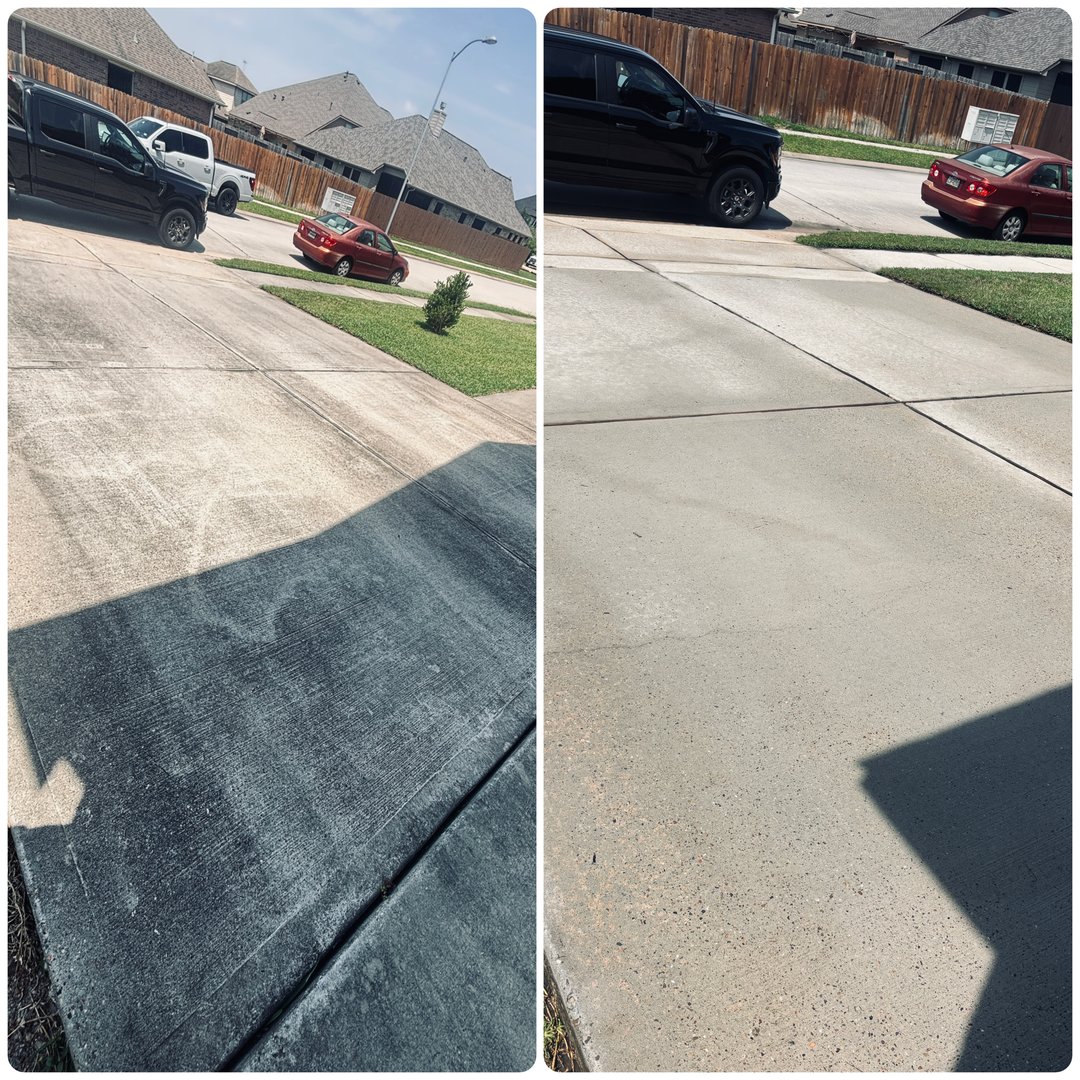
Oil stains on a concrete driveway are one of those problems that looks permanent but usually isn't. If you've got dark spots from a leaking car, old spills, or years of parking in the same spot, you have real options to get that concrete back to looking clean. The trick is knowing which method works for your specific situation, because pressure washing alone won't cut it for most oil stains, and using the wrong approach can actually damage the concrete or just spread the problem around.
Why Pressure Washing Alone Doesn't Work on Oil
A lot of people assume a pressure washer will blast away an oil stain the way it cleans dirt or mold. That's not how oil works. It soaks into the porous surface of concrete and bonds to it chemically. Blasting water at it just pushes the water around the edges. You might see a temporary improvement because the surface gets wet and looks darker, but once it dries, the stain is still there. High pressure can also damage the concrete itself, especially if it's older or already compromised. You'll end up with pitting or surface erosion that makes the driveway look worse.
Start with a Degreaser
Before any washing happens, you need a degreaser that's actually designed to break down oil. This is the real work. A good concrete degreaser contains surfactants that chemically separate the oil from the concrete so it can be rinsed away. Pour or spray it directly on the stain, let it sit for the time the product recommends, usually 10 to 30 minutes depending on how heavy the stain is. For old, set-in stains, you might let it work longer. Then scrub it with a stiff-bristled brush. Don't use anything wire that will scratch the concrete. A push broom or deck brush works fine.
Some people in the Spring area have good luck with enzyme-based degreasers, which are gentler on the concrete and the environment. They take longer to work but are worth trying first, especially if you're concerned about damaging the surface. If the stain is really old or deep, you might need a stronger degreaser with harsher chemicals. Just read the label carefully and follow the safety instructions.
Rinse Carefully With Low to Medium Pressure
Once the degreaser has done its job and you've scrubbed, rinse it away with water. This is where pressure washing comes in, but at a much lower pressure than you'd use on dirt or algae. Aim for 1500 to 2000 PSI, not 3000 or higher. Keep the nozzle moving and don't concentrate the stream in one spot. You're trying to rinse away the degreaser and the broken-down oil, not carve into the concrete. A wider fan pattern is safer than a narrow stream.
If you don't have a pressure washer, a garden hose with a spray nozzle works too. It'll take longer to rinse, but it gets the job done without any risk of surface damage. On older concrete or thin overlays, a hose is actually the smarter choice.
Stubborn Stains Need Poultice
For stains that won't budge after the degreaser and scrubbing, a poultice is your next step. This is a paste made from an absorbent powder mixed with a liquid that pulls oil up and out of the concrete. Common poultice materials include cat litter mixed with acetone, or you can buy commercial concrete poultice products. Spread it thick over the stain, let it dry completely, then sweep it up. The oil comes out with it. You might need to repeat this a few times on really bad stains.
This method takes patience but works on stains that have been there for years. It's also safe for the concrete itself and won't cause any damage.
Prevention and Timing
The sooner you treat an oil stain, the easier it is to remove. Fresh spills come out much faster than stains that have had weeks to soak in. If you park in the same spot regularly and your vehicle leaks, put down cardboard or a drip pan to catch it before it hits the concrete.
Once you've cleaned the driveway, consider a concrete sealer. It won't remove existing stains, but it fills the pores of the concrete so new oil can't soak as deep. You'll have an easier time cleaning spills in the future because they'll sit on top rather than soaking through.
When to Call a Professional
If you've tried a degreaser and the stain is still dark, or if your driveway is old and you're worried about pressure damage, that's when calling in RC Pressure Washing TX makes sense. We know how to match the right chemical treatment and pressure level to your specific concrete, and we can usually get results that DIY methods can't match. If you're in Spring and dealing with a stubborn oil stain, give us a call and we'll walk you through what we'd do and what it would cost.